Onboarding Tool
A seamless mobile onboarding for new employees - simple, fast, and human-centered.
A lightweight onboarding platform designed to remove friction for new hires. By eliminating login barriers and breaking the process into digestible steps, we reduced uncertainty and operational overhead in high-volume hiring scenarios.
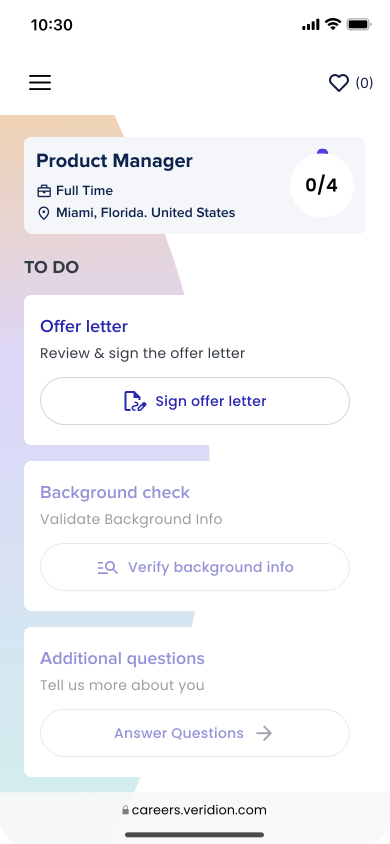
Context
In high-volume hiring scenarios, many new employees struggled during their first days before starting work. The onboarding process was unclear, fragmented, and heavily dependent on manual steps, which often led to confusion about what needed to be completed, when, and where. This lack of clarity resulted in increased operational overhead for employers and, in some cases, candidates not showing up on their first day. The core issue was the absence of a clear, structured, and automated onboarding experience that could guide users step by step and reduce uncertainty before day one.
Approach
The goal was to design a lightweight onboarding platform that would remove friction as early as possible in the process. Key assumptions guiding the approach included: no account creation or login should be required, the experience should be accessible instantly on any device, and user progress should be preserved automatically without relying on formal authentication. To achieve this, the onboarding flow was designed around small, digestible steps rather than a long list of requirements presented upfront. The experience needed to clearly communicate progress, what had already been completed, and what was still ahead-without overwhelming users.
Solution
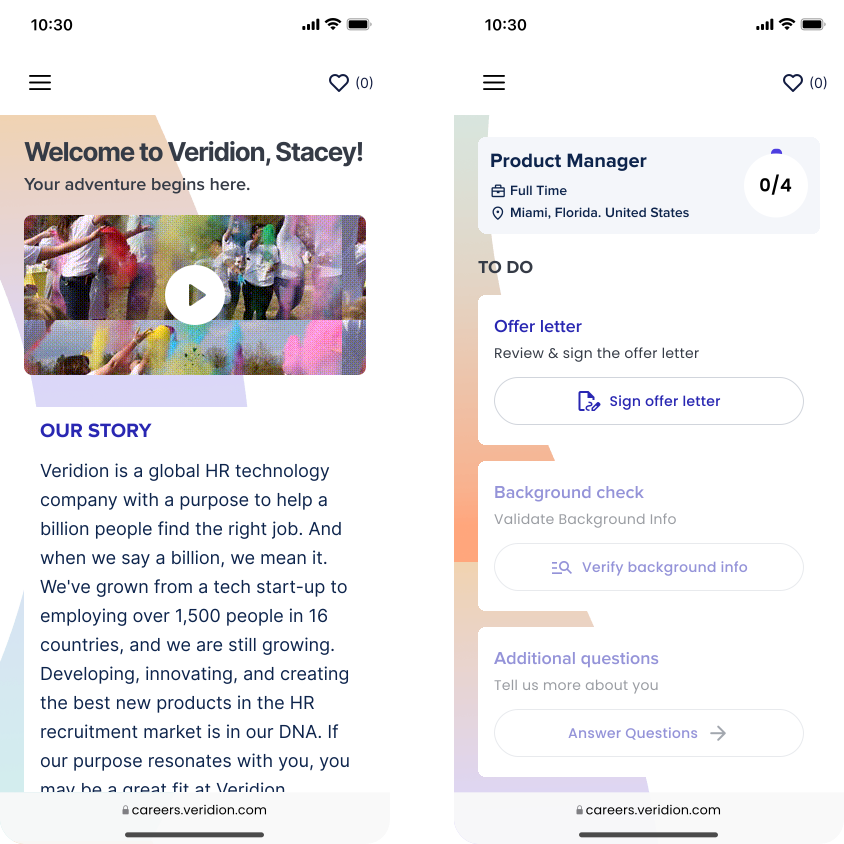
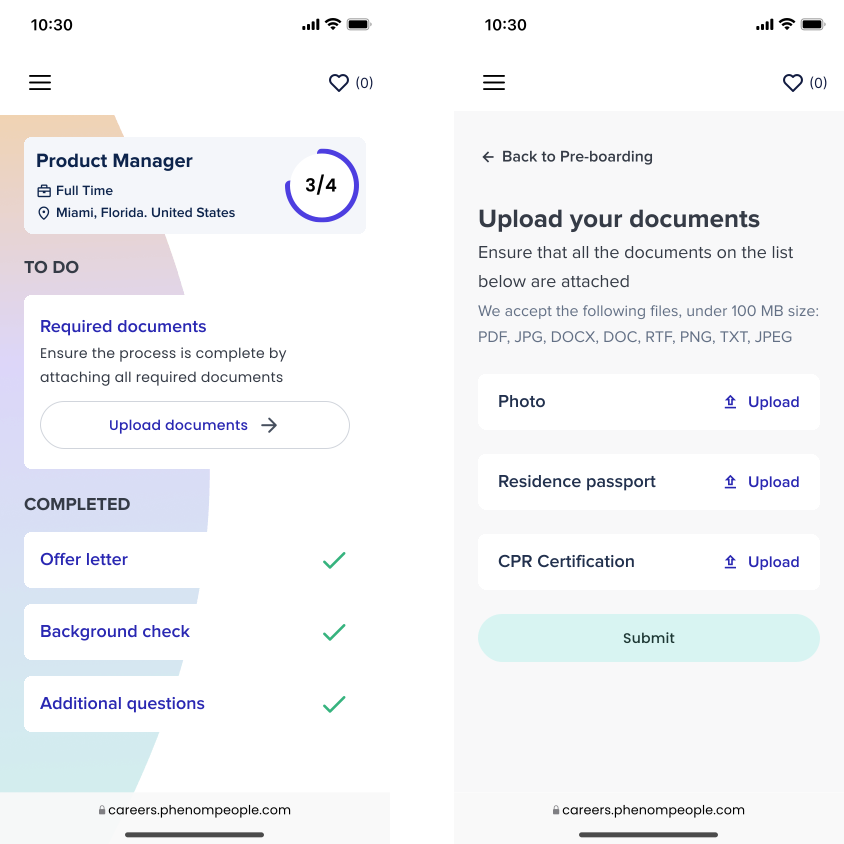
I designed a short, step-based onboarding platform that allowed new hires to access all required information and tasks without logging in or creating an account. User progress was saved locally (using cached state), ensuring that previously completed steps remained intact even if the session was interrupted. The interface presented onboarding as a clear sequence of manageable actions: a brief introduction to the company and role, contact details for key people, required documents to upload before starting work, and visual progress indicators with simple checklists. Rather than exposing the full scope of tasks at once, the platform gradually revealed steps, helping users stay focused and motivated. The experience was designed to feel approachable and rewarding, reinforcing a sense of progress and early belonging to the team.
Outcome
The onboarding platform significantly reduced ambiguity in the pre-employment phase and helped standardize the experience for large groups of new hires. By automating key steps and presenting them in a clear, structured flow, the solution reduced reliance on manual coordination and improved preparedness before the first day of work. The clearer onboarding journey addressed one of the main causes of early drop-off-uncertainty-and supported higher attendance rates on the first day by setting clear expectations and guidance upfront.
Key Learnings
“This project reinforced the importance of reducing friction at the earliest touchpoints of the employee journey, especially in high-volume contexts where small inefficiencies scale quickly. It also highlighted how much impact can be achieved through simplicity—by limiting cognitive load, breaking complex processes into smaller steps, and making progress visible. Designing onboarding as a gradual, rewarding experience proved far more effective than presenting users with a comprehensive but overwhelming checklist. Finally, the project emphasized that onboarding is not only a logistical process but also an emotional one. Helping users feel informed, supported, and gradually integrated into the team can directly influence commitment and follow-through.”